


- 美国GSG美标管螺纹量规
- 美国GSG石油螺纹规│GSG牙形板
- 美国GSG美标ASME螺纹规
- 美国GSG精密量规│进口量仪
- 美国GSG螺纹指示规│螺纹量仪
- 美国GSG倒角量规│锪孔量规
- 瑞士Trimos测高仪│Trimos测长机
- Hexagon影像仪│海克斯康三坐标
- 苏州Mitutoyo日本三丰量具
- Fischer菲希尔涂层测厚仪
- Elcometer易高涂层测厚仪
- GE超声波探伤仪
- 奥林巴斯超声波探伤仪
- GBIS超声波探头
- Bruker布鲁克光谱仪
- 赛普斯SCIAPS光谱仪
- Western Instrument仪器
- G.A.L. Gage焊接量规
- Clark硬度计│Sun-Tec
- 日本future-tech硬度计
- King便携式布氏硬度计
- Rex Gauge邵氏硬度计
- Ames便携式洛氏硬度计
- Hemco Gage螺纹规
- PMC Lone Star石油量规
- Vermont螺纹规│VTG螺纹规
- GageAssembly螺纹规
- Threadmaster进口螺纹规
- WESTport Corporation
- Threadcheck螺纹规│三线规
- Mueller Gage沟槽量仪
- Kroeplin精密卡规
- 美国环球Universal Punch
- 德国Schwenk进口内径量仪
- Allen Gauge and Tool
- Fowler High Precision
- Swiss Precision Instruments
- Flexbar Machine Corporation
- Acem螺纹规│Stub Acme螺纹规
- 苏州工量具│测量仪器
- Wrentham Tool Group
- Meyer Gage针规、梅尔量规
- ASKER橡胶硬度计
- NAKANISHI高速主轴
- OJIYAS螺纹规│OJIYAS气动量仪
- Microset 复制胶
- DeFelsko涂层测厚仪
- OSG丝锥│OSG螺纹规
- Western Gage 气动量仪检具
- Michigan Spline Gage Co
- Southwest Calibration Service
- McCord and Company
- Pennoyer-Dodge Company
- Pi Tape Texas, LLC
- BARCOR INC.
- Advanced Systems and Designs
- Calmetrics Inc

|
ISO 7-1锥度塞规
ISO 7-2 Rp/Rc锥度塞规
美国原装进口GSG螺纹量规

Taper Full form Thread Plug with relief - Gauge No.2 2号规
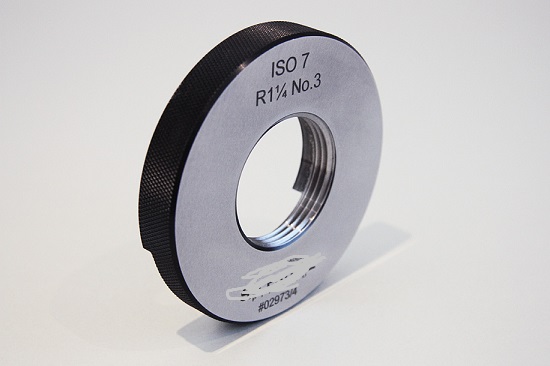
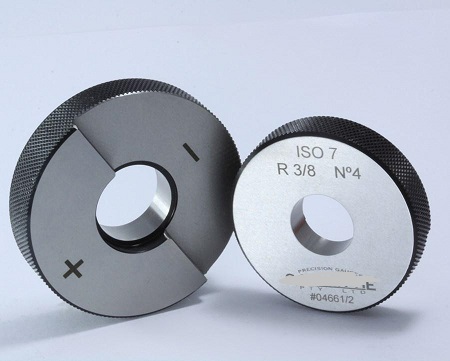
Taper Modified Thread form Check Plug - Gauge No.5
Parallel Modified Thread form Check Ring - Gauge No. 6
Size Range covered is from pipe diameter 1/16" to 8".
关注:惠氏锥管螺纹标准EN 10226或者国际标准ISO-7-2
ISO 7-2: Pipe Threads where Pressure-Tight
Joints are made on the Threads; Part 2: Verification by means of Limit Gauges
ISO 7-2:2000 Foreword
This second Edition cancels and replaces the first edition (ISO 7-2:1982).
ISO 7-2:2000 Introduction
This revision of ISO 7-2 has been undertaken with the aim of providing a
unified gauging system (1)(2) which could be adopted worldwide and thus
eliminate the differing results (3) obtained with the use of gauges in
accordance with ISO 7-2:1982 and existing national practices. This revision
also includes details of plain ring gauges to provide additional means of
checking ISO 7-1 external
threads and a parallel modified thread form check ring gauge for checking taper
full form treaded plug gauges.
ISO 7-2 Scope
This part of ISO 7 specifies a process using limit gauges, for the validation
of taper internal and external threads and parallel internal threads on piping
systems components and other products, the dimensions and tolerances of which
are detailed in ISO 7-1.
The gauging system described may not be suitable, without special precaution,
for gauging of threads on injections moulded plastic workpieces. This part of
ISO 7 does not cover completely all the requirements necessary for full control
of thread quality and dimensions. Additional control of tools and equipment and
visual inspection during production are required to ensure complete compliance
with ISO 7-1,
for example the length of useful thread on internally threaded workpieces
should be checked by direct measurement. Annex A gives a summary of the gauges
included in this part of ISO 7, together with details of the thread elements
controlled by each gauge and gauge identification numbers. In the event of a
dispute over compliance with the requirements of ISO 7-1,
the gauges in this part of ISO 7 are to be considered as decisive for the
thread elements which they control on the workpieces.
Notes:
1. Unified gauging system: The ISO 7-2:2000 gage design was protested by Japan;
UK and USA representivies on the ISO committee; regardless; the standard was
ratified.
2. Gage 3 has a single point contact on the taper thread which could rapidly
wear and create erroneous readings.
3. Eliminate the differing results: A laudable goal, but with tapered pipe
threads an impractical goal.
4. ISO 7-1 is technically equivalent to EN 10226-1 and EN 10226-2 combined.
5. ISO 7-2 is technically equivalent to EN 10226-3
EN 10226-3;
Pipe Threads where Pressure Tight Joints are made on the Threads - Part 3:
Verification by means of Limit Gauges
EN 10226-3 Foreword
ISO 10226-3 is based, with editorial modifications on ISO 7-2 “Pipe
threads where pressure-tight joints are made on the threads- Part 2:
Verification by means of Limit Gauges”. Pipe thread gages defined by EN
10226-3 are dimensionally identical to and fully interchangeable with pipe
threads to ISO 7-2.
EN 10226 has been prepared in three parts.
Part 1 and Part 2 reflect
the two thread joining systems in regular use in Europe and Worldwide.
Part 1 details
taper external and parallel internal pipe threads.
Part 2 details
taper external and taper internal pipe threads.
Part 3 details the requirements for the gauging of pipe threads conforming
to Part 1 and Part 2.
EN 10226-2 Scope
EN 10226-3 specifies a process using limit gauges, for the validation of taper
internal and external threads and parallel internal thread on piping system
components and other products, the dimensions and tolerances of which are
detailed in EN 10226-1, EN 10226-2and ISO 7-1.
In the event of a dispute over compliance with the requirements of EN 10226-1, EN 10226-2 and ISO 7-1,
gages in EN 10226-3 and ISO 7-2 are
to be considered as decisive for the thread elements which they control on the
work piece.
The EN 10226-3 gauging system described may not be
suitable, without special precautions, for gauging of threads on injection
molded plastic work pieces.
EN 10226-3 does not cover completely all requirements for
full control of thread quality and dimensions. Additional control of tools and
equipment and visual inspection during production are required to ensure
complete compliance with EN 10226-1, EN 10226-2 and ISO 7-1,
for example the length of useful thread on internally threaded work pieces
should be checked by direct measurement.
EN 10226-3 Annex A gives a summary of the gauges included
in this document, together with details of the thread elements controlled by
each gauge and gauge identification numbers.
EN 10226 Notes
Note 1: Threaded joints using taper external threads and parallel internal
threads are detailed in EN 10226-1.
Note 2: The requirements for taper external threads are identical in EN 10226-1 and EN 10226-2.
The common requirements for the taper external pipe thread are in Part 1 and
in Part 2;
so as to present the complete thread joining system in each part.
Note 3: For pipe threads where pressure-tight joints are not made on the
threads see ISO 228-1.
Note 4: EN 10226-3 gives details of recommended gauging systems for the
verification of thread dimensions and thread form. The gauging system
defined in EN 10226-3 is technically equivalent to the gauging system defined
in ISO 7-2.
关注惠氏直管螺纹标准BS 2779,或者国际标准 ISO 228
British Standard Pipe Parallel ISO-228
The official name of the parallel pipe screw thread
standard ISO 228 is: Pipe Threads Where Pressure-Tight Joints Are Not Made On
The Threads.
This parallel pipe screw thread standard ISO 228 comes in
two parts:
ISO 228; 2000: Part 1 Dimensions, Tolerances and Designation
ISO 228; 1987: Part 2 Verification by Means of Limit Gauges
Older standards that define the same thread are: BS 2779; DIN 2999.